Proudly serving Huntsville
General Contractor Madison Al in Huntsville
- Serving the Hampton Cove–Madison corridor
- Itemized, upfront pricing
- No pressure to sign today
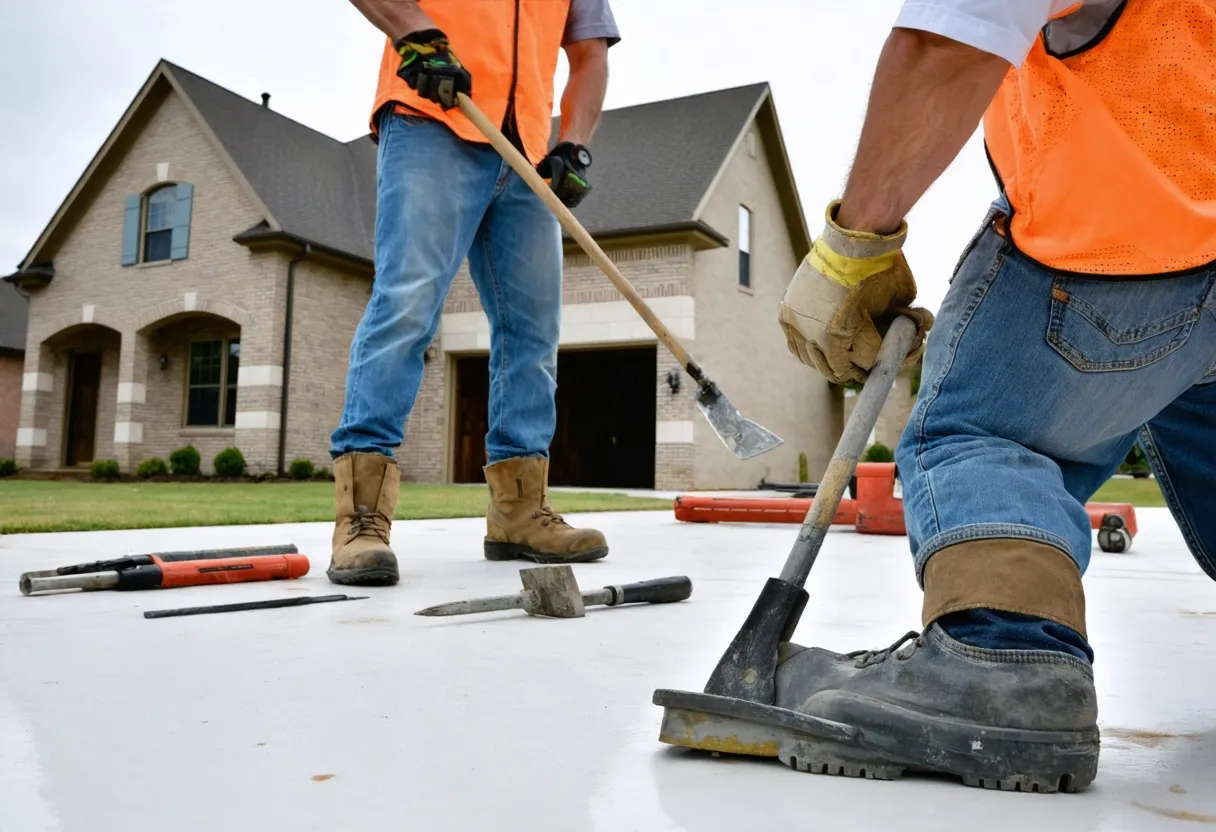
If you're searching for a general contractor in Madison, AL or anywhere across the greater Huntsville area, you're probably weighing more than price. You want a builder who shows up when they say they will, pulls the right permits, carries real insurance, and stands behind the work after the final walkthrough. That's the gap a lot of homeowners run into after a bad remodeling experience: a contractor who disappears mid-project, a change order that ballooned out of control, or a "warranty" that turned out to be a verbal promise with nothing behind it. Our approach is different — documented licensing and insurance, a written workmanship warranty, and project transparency for every homeowner across Huntsville's growth corridor, including Hampton Cove, Harvest, Owens Cross Roads, and Madison. Learn more about our full range of general contracting services or keep reading for a complete breakdown of what we do, how we price it, and how the process actually works from first call to final punch list.
What a Full-Service General Contractor in Madison, AL Actually Covers
"General contractor" gets used loosely, so it's worth being specific about what that means in practice. A true full-service GC manages the entire lifecycle of a construction or remodeling project — design coordination, permitting, subcontractor scheduling, material procurement, on-site supervision, inspections, and closeout — rather than just showing up to swing a hammer. In the Huntsville and Madison market, that scope typically includes:
- Kitchen remodeling — full gut renovations, layout changes, cabinetry, countertops, and appliance integration
- Bathroom remodeling — from powder room refreshes to primary suite overhauls with custom tile and curbless showers
- New construction and home additions — room additions, second-story build-outs, in-law suites, and ground-up custom homes
- Water, fire, and storm damage restoration — structural repair and rebuild after a covered loss
- Design-build services — a single point of accountability from concept sketches through final inspection
- Pre-construction, budgeting, and value engineering — cost modeling before a single wall comes down
- Commercial development — tenant build-outs, ground-up commercial construction, and light industrial projects
The common thread is accountability. When one contractor is responsible for the whole job — not a patchwork of homeowner-hired subs — schedules stay tighter, mistakes get caught earlier, and there's one warranty covering the finished product instead of six different trades pointing fingers at each other.
Kitchen Remodeling in Madison and Huntsville
Kitchens are the single most requested remodel in this market, and for good reason — it's the room that affects daily life the most and returns the most value at resale. A kitchen remodel can mean anything from swapping countertops and refacing cabinets to a full gut-and-reconfigure that moves plumbing and knocks out a wall for an open-concept layout. Homes in older Huntsville neighborhoods tend to have smaller, more compartmentalized kitchens, while newer construction in Madison and Harvest often already leans open-concept but still needs updated finishes, better storage, or an island reconfiguration to work for how the family actually cooks.
A well-run kitchen remodel covers cabinetry (stock, semi-custom, or full custom), countertop material selection (quartz, granite, and butcher block are the most common requests here), lighting layout, plumbing and electrical relocation if the layout changes, flooring, backsplash, and appliance integration. We also handle structural evaluation up front if you're considering removing a load-bearing wall — that's a common ask in ranch-style homes throughout the area, and it needs an engineer's sign-off before demo ever starts, not after. For a deeper look at layouts, material options, and typical project timelines, see our dedicated page on kitchen remodeling in Huntsville.
Bathroom Remodeling in Madison and Huntsville
Bathroom projects range widely in scope. On one end, a cosmetic refresh — new vanity, fixtures, tile, and paint — can be done in under two weeks. On the other end, a primary bath overhaul that relocates plumbing, converts a tub to a curbless walk-in shower, or expands the footprint into an adjacent closet is a multi-week project that touches framing, waterproofing, tile work, and sometimes structural changes.
Moisture management is the part homeowners underestimate most. A bathroom remodel is only as good as the waterproofing behind the tile — a corner cut here shows up as a mold problem or subfloor rot two years later, not two weeks later. We build every wet area to a proper waterproof membrane system before a single tile is set, and we don't shortcut ventilation, because an underpowered exhaust fan will undo good tile work over time. Full details on scope, fixtures, and typical cost drivers are on our bathroom remodeling page.
New Construction and Home Additions
Huntsville's growth corridor — Madison, Harvest, Hampton Cove, and Owens Cross Roads — has seen steady residential expansion, and a lot of homeowners in established neighborhoods are choosing to add on rather than move, especially with inventory tight and interest rates keeping people put. Common addition projects in this market include:
- Primary suite additions with a new bedroom, bath, and closet footprint
- Second-story additions on single-story ranch homes to add bedrooms without expanding the lot footprint
- In-law or multigenerational suites with a separate entrance
- Sunrooms and screened porch conversions to permanent living space
- Garage conversions and detached accessory dwelling units
Additions are structurally and administratively more complex than interior remodels — they require a foundation tie-in or new foundation, roofline integration, and a full permit and inspection sequence through the local building department. Ground-up custom home construction follows the same discipline at a larger scale: site work, foundation, framing, mechanical rough-ins, and finish work, all sequenced and inspected in order. See our home additions page for typical addition types, square footage ranges, and what drives the cost difference between a single-story bump-out and a second-story build.
Water, Fire, and Storm Damage Restoration
North Alabama gets its share of severe weather — spring storm systems, occasional straight-line wind events, and the humidity that makes any undetected leak a mold risk within days rather than weeks. Restoration work is different from a planned remodel because it starts with an emergency, not a design meeting, and the priority sequence matters:
Water Damage Restoration
Whether it's a burst supply line, a failed water heater, or roof intrusion from a storm, the first 24-48 hours determine whether you're looking at a drywall and flooring repair or a full mold remediation project. That means extraction and structural drying before any rebuild starts, moisture-mapping the affected framing and subfloor, and only closing walls back up once moisture readings confirm the structure is dry.
Fire Damage Restoration
Fire damage repair covers more than the visibly burned area — smoke and soot travel through HVAC systems and wall cavities well beyond the source, and structural framing exposed to high heat needs to be evaluated before it's rebuilt over. A proper fire restoration scope includes structural assessment, smoke and soot remediation, and full rebuild of affected rooms to match (or improve on) the original finish.
Storm Damage Restoration
Wind and hail events can compromise roofing, siding, fencing, and windows, sometimes without obvious interior signs until the next heavy rain. Storm restoration work typically starts with an exterior envelope assessment — roof, flashing, siding, windows — followed by interior repair for any water intrusion that occurred before the exterior was secured. We also work directly with insurance adjusters on restoration claims so the scope of repair is documented and matches what the policy actually covers.
Design-Build Services
Design-build means one contract and one point of accountability for both design and construction, instead of hiring an architect separately and then bidding the drawings out to contractors who had no input on constructability. The advantage shows up in three places: fewer redesigns (because the team pricing the job is the same team drawing it), faster overall timelines (design and permitting-prep phases can overlap instead of running sequentially), and a single warranty covering the finished result rather than a design firm and a builder each pointing at the other when something doesn't fit. For additions, kitchen reconfigurations, and new construction, we handle concept development, material selection, and construction documents in-house before the project ever goes to permit.
Pre-Construction, Budgeting, and Value Engineering
Before a project is priced for real, it goes through pre-construction — the phase where scope, site conditions, and budget get reconciled before anyone commits to a number. This is where value engineering happens: identifying where a design choice adds cost without adding value, and where a homeowner can substitute a material or method to hit their budget without cutting corners on structure, waterproofing, or code-required systems.
A concrete example: a homeowner set on a full structural wall removal for an open kitchen might get a value-engineered alternative — a partial wall removal with a wide pass-through opening — that achieves 80% of the visual openness at a fraction of the structural beam cost. Good value engineering isn't about downgrading the project; it's about spending the budget on what the homeowner will actually notice and use every day, rather than on structural or mechanical work that's invisible once it's closed up.
Commercial Development
Beyond residential work, commercial projects in the Huntsville area — tenant build-outs, ground-up commercial construction, and light industrial space — follow a similar but more regulation-dense process: site evaluation, commercial permitting and plan review, ADA compliance, fire marshal sign-off, and coordinated trade scheduling across larger crews. Commercial clients need a contractor who can manage a compressed timeline (every week a retail space sits unopened is lost revenue) while still passing every required inspection the first time. Our commercial process runs on the same documented licensing, insurance, and warranty standards as our residential work — just scaled to commercial code requirements and occupancy timelines.
Project Planning and Permitting in Madison and Huntsville
Permitting is the part of a remodel or build that homeowners most underestimate, and it's also the part where an unlicensed or inexperienced contractor most often cuts corners — sometimes without telling you. Depending on the scope, a project may need building permits, electrical permits, plumbing permits, and mechanical permits, each requiring its own inspection at defined stages of construction. Structural work, like removing a load-bearing wall or building an addition, typically also requires engineered drawings before a permit is issued.
Permit requirements and review timelines vary by jurisdiction, and homes across the growth corridor fall under different local building departments depending on whether they're inside Huntsville city limits, in Madison, or in unincorporated Madison County areas like Harvest or Owens Cross Roads. Part of our pre-construction process is confirming which jurisdiction your property falls under and what that means for permit timeline and inspection sequence before we ever give you a start date — not after we've already broken ground and discovered a hold-up. Skipping permits isn't just a legal risk; it can also create real problems at resale, since unpermitted work has to be disclosed and can hold up a buyer's financing or insurance.
Our 5-Step Project Process
Every project we take on — remodel, addition, restoration, or new construction — runs through the same five stages. The consistency is intentional: it's how we keep projects on schedule and keep you informed at every stage instead of hearing "we'll let you know" for weeks at a time.
- Consultation and Site Assessment — We walk the property, discuss your goals and budget range, and evaluate existing conditions (structural, electrical, plumbing) that could affect scope.
- Design and Pre-Construction — Concept development, material selection, and value engineering to align the design with your budget, followed by construction documents.
- Permitting and Scheduling — We handle permit submission and approval with the applicable local building department, and build a realistic construction schedule with subcontractor and material lead times factored in.
- Construction — On-site work proceeds in sequence with scheduled inspections at each required stage, and you get regular progress updates rather than radio silence.
- Final Walkthrough and Warranty Activation — A joint walkthrough to confirm every item on the punch list is complete, final inspection sign-off, and your written workmanship warranty goes into effect.
Licensing, Insurance, and BBB Accreditation
Alabama requires a state-licensed general contractor for residential projects above a certain dollar threshold and for essentially all commercial work, and that license requires passing trade and business/law exams plus proof of financial responsibility. When you hire an unlicensed contractor for a project that legally requires one, you lose your legal protections if something goes wrong — and it can also complicate insurance claims and resale disclosures down the line.
We operate as a fully licensed and insured general contractor, which means:
- General liability insurance that protects your property if something is damaged during construction
- Workers' compensation coverage for crews on site, so you're not liable if a worker is injured on your property
- State contractor licensing appropriate to the scope and value of the project
- BBB accreditation, reflecting a commitment to the BBB's standards for truthful advertising, transparency, and responsiveness to customer concerns
We're glad to provide proof of license and insurance before you sign anything — that's a reasonable ask of any contractor, and you should be wary of anyone who hesitates to produce it.
Get your free quote
Tell us about the project — pricing comes back in writing, with no pressure attached.
More general contractor services
Ready to talk about your project?
Reach out and get a clear, no-obligation quote.