Proudly serving Huntsville
General Contractor Faq Huntsville
- Serving the Hampton Cove–Madison corridor
- Itemized, upfront pricing
- No pressure to sign today
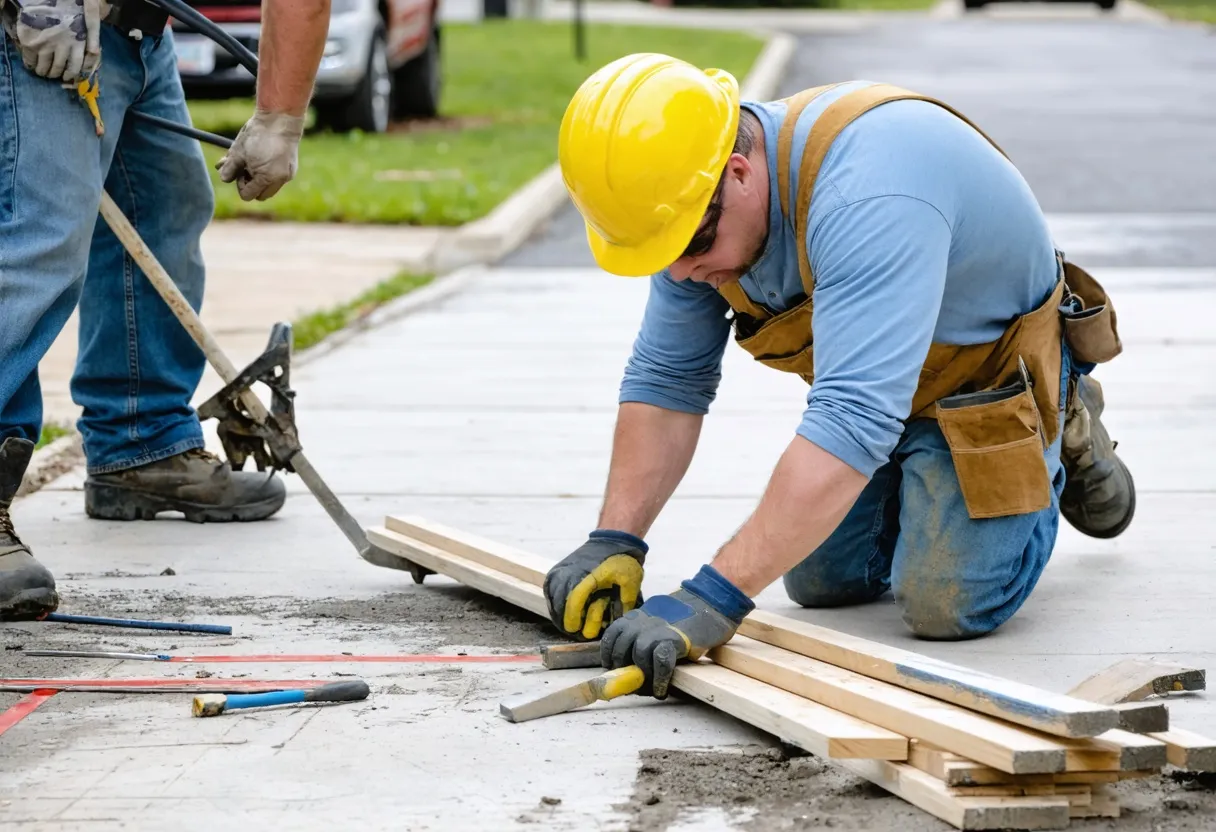
If you're searching for a general contractor in Huntsville, you probably have more questions than a single phone call can answer. Who's actually licensed? What does a warranty cover once the crew leaves? How does a kitchen remodel differ from a fire damage rebuild in terms of process and cost? This page is built to answer the questions Huntsville homeowners and property owners ask most often — from Hampton Cove to Harvest to Owens Cross Roads to Madison — with straight answers instead of marketing fluff. Where we make a claim about our own credentials, process, or coverage area, it's backed up on our licensing, insurance, and warranty page, not just asserted here.
Our approach is simple: warranty-backed craftsmanship, documented licensing and insurance you can actually verify, and project transparency that's specific to the neighborhood you live in — not a generic script we recycle for every city in the Southeast. Huntsville's growth corridor has grown fast enough that a lot of contractors here are new to the market or working outside their depth. This FAQ exists so you can vet anyone you're considering — including us — with real questions.
What Does a General Contractor in Huntsville Actually Do?
A general contractor is the single point of accountability for a construction or renovation project. Instead of you hiring and scheduling a plumber, an electrician, a framer, a drywall crew, and a painter separately — and hoping their timelines line up — a general contractor holds the contract, pulls the permits, schedules and supervises every subcontractor, orders materials, manages the budget, and answers for the finished result. On a well-run job, you have one phone number to call, not eight.
In practice, that means a general contractor is responsible for:
- Scoping the project and producing a written estimate that reflects real material and labor costs, not a placeholder number
- Pulling the correct permits from the City of Huntsville, Madison County, or the relevant municipality
- Hiring, scheduling, and supervising licensed subcontractors (electrical, plumbing, HVAC, structural)
- Managing the construction schedule and communicating delays before they become surprises
- Passing inspections at each required stage
- Standing behind the finished work with a written workmanship warranty
General contracting questions in Huntsville, AL tend to cluster around three themes: credentials (is this person actually licensed and insured), process (what happens and in what order), and cost (why does one bid look so different from another). We'll cover all three in depth below.
Licensing and Insurance: What Huntsville Homeowners Should Verify
Alabama regulates general contractors through more than one licensing body, and the requirements differ depending on whether a project is residential or commercial in nature. Commercial construction work above a certain contract value falls under the Alabama Licensing Board for General Contractors, while residential home building and remodeling are addressed separately through the state's Home Builders Licensure Board. Because the dollar thresholds and rules that trigger licensure differ between these two tracks — and because state regulations are amended from time to time — we'd rather you not rely on a rule-of-thumb number at all. The safer approach, and the one we recommend to every homeowner we talk to, is to ask any contractor bidding your job to show current, active proof of licensing for the specific type of work you need, and to verify that license directly with the state board rather than taking a business card at face value.
Insurance works the same way. A legitimate general contractor should carry general liability insurance and, if they have employees, workers' compensation coverage. Ask for a certificate of insurance naming you or your project — a reputable contractor will produce this without hesitation. If a contractor is reluctant to share licensing or insurance documentation, treat that as a red flag, not an oversight.
We publish our own licensing and insurance documentation, along with the specifics of our workmanship warranty, on our licensed, insured, and warranty-backed page — we'd rather you check it yourself than take our word for it.
BBB Accreditation and Why It Matters
Better Business Bureau accreditation isn't a license, but it does mean a business has agreed to BBB's standards for advertising honesty, transparency, and complaint response — and that its complaint history is publicly visible. For homeowners comparing several bids, an accredited BBB profile is one more data point you can check independently, separate from whatever the contractor tells you directly. When you're vetting any general contractor in the Huntsville market, we'd encourage you to look up their BBB profile the same way you'd look up their state license: directly, not through a screenshot on their own website.
Services We're Asked About Most
Below is a rundown of the project types that generate the most general contracting questions in Huntsville, AL — what each one actually involves, and how the process differs from project to project.
Kitchen Remodeling
Kitchen remodels range from a cosmetic refresh — new cabinet fronts, countertops, and a backsplash — to a full gut renovation that moves plumbing and electrical, opens a wall, and reconfigures the layout entirely. The scope determines almost everything else: permitting requirements, timeline, and cost. A cosmetic refresh might take two to three weeks. A full reconfiguration involving moved plumbing lines, new electrical circuits, and structural changes to an opening between the kitchen and an adjacent room can run six to ten weeks once permitting, inspections, and lead times on custom cabinetry are factored in.
The most common mistake we see homeowners make is finalizing a layout before confirming that plumbing and electrical can actually move where the design assumes they can. A general contractor should flag those constraints during the estimate phase, not after demolition has already started.
Bathroom Remodeling
Bathroom projects are smaller in square footage but often more complex per square foot than kitchens, because they concentrate plumbing, electrical, ventilation, and waterproofing into a tight space. Tile work, shower pan waterproofing, and proper exhaust ventilation are where corners get cut on lower-quality jobs — and where problems show up months later as leaks, mold, or failed grout. A competent general contractor sequences the trades so that waterproofing is inspected before tile goes down, not discovered to be inadequate after the room is finished and sealed up.
Water Damage Restoration
Water damage restoration starts with mitigation — extracting standing water, drying out framing and subfloor, and controlling humidity to prevent mold growth — before any rebuild work begins. The two phases require different expertise and often different timelines: mitigation typically needs to start within hours of a loss, while the rebuild phase (drywall, flooring, trim, paint) follows once moisture readings confirm the structure is actually dry. A general contractor coordinating both phases should be documenting moisture readings throughout, both to confirm the space is safe to rebuild and to support any insurance claim tied to the loss.
Fire Damage Restoration
Fire damage restoration covers structural repair, but also smoke and soot remediation, which is easy to underestimate. Smoke odor and residue travel through HVAC systems and wall cavities well beyond the visibly burned area, so a proper scope of work usually extends further than the damage looks at first glance. Rebuilding after a fire typically involves close coordination with your insurance adjuster, and a general contractor experienced in fire restoration should be comfortable documenting scope and cost in a way that holds up in that claims process.
Storm Damage Restoration
North Alabama sees its share of severe thunderstorms, high winds, and occasional tornado activity, and storm damage restoration work spans everything from roof and siding repair to full structural rebuilds after significant wind or tree damage. As with fire and water losses, timing matters — a compromised roof or building envelope left exposed invites secondary damage from the next rain event. A general contractor who can move quickly on temporary protection (tarping, board-up) while the permanent repair is scoped and permitted is doing the job correctly.
New Construction and Home Additions
New construction and additions are the longest and most involved projects a general contractor handles, because they combine design, engineering, permitting, and every construction trade in sequence. Additions carry a specific wrinkle that new-build construction doesn't: tying new structure, roofline, and systems into an existing home cleanly, both structurally and aesthetically. A poorly executed addition is often obvious from the street — a roofline that doesn't match, siding that doesn't line up. That's a design and planning problem as much as a construction one, which is why we treat design-build and pre-construction planning as part of the same process rather than an upsell.
Design-Build Services
In a traditional model, you hire an architect or designer, get a finished design, and then take that design out to bid with separate contractors — a process that can surface budget surprises late, after the design is already locked in. Design-build consolidates design and construction under one contract with one team, so cost feedback happens during design instead of after it. That means if a design element is going to blow the budget, you find out while it's still a sketch, not after the framing is up.
Commercial Development
Commercial projects — tenant build-outs, ground-up commercial construction, and multi-phase developments — involve a different regulatory layer than residential work: commercial building codes, ADA compliance, fire marshal review, and often a more involved permitting timeline through the relevant municipality. Commercial clients also typically need more formal budget documentation for lenders or investors, which is where pre-construction estimating and phased draw schedules matter more than they do on a typical residential remodel.
Pre-Construction, Budgeting, and Value Engineering
Pre-construction is the planning work that happens before a shovel touches dirt: firming up scope, getting real pricing from subcontractors and suppliers instead of rough allowances, and identifying anything that could blow up the schedule or budget later — a structural condition, a utility conflict, a permitting requirement specific to the site. On a larger remodel, addition, or commercial project, skipping this step is the single biggest reason budgets go sideways mid-construction.
Value engineering is often misunderstood as "cutting quality to save money." Done properly, it's the opposite: it's identifying where a different material, method, or sequencing choice delivers the same functional and aesthetic result for less cost, without touching the things that actually matter to you — structural integrity, waterproofing, code compliance. A contractor doing value engineering well will show you the tradeoff, not just make the substitution and hope you don't notice.
Project Planning and Permitting in Huntsville and Madison County
Permitting requirements vary depending on where your project sits. A remodel inside the City of Huntsville goes through the city's building department; a project in unincorporated Madison County, or in a municipality like Madison, AL, may fall under a different jurisdiction's process and timeline entirely. Projects near Redstone Arsenal can carry additional considerations depending on proximity and scope. None of this is meant to be intimidating — it's meant to explain why "how long does permitting take" doesn't have one universal answer, and why a contractor who's worked across Huntsville's growth corridor, rather than just one subdivision, is better positioned to tell you what to expect for your specific address.
We walk through exactly how permitting fits into our project timeline, step by step, on our project process and permitting page — it's worth reading before you sign a contract with anyone, us included, so you know what to expect and when.
Our 5-Step Project Process
Every project we take on, regardless of size, moves through the same five stages. Consistency here is what keeps a project on schedule and on budget.
- Consultation and site visit. We walk the property, discuss what you want to accomplish, and identify any conditions — structural, access, utility — that will affect scope.
- Estimate and scope development. You get a detailed, itemized estimate, not a single lump-sum number. If value engineering options exist, we present them here.
- Design and permitting. Drawings are finalized, and we handle permit submission and approval with the correct jurisdiction for your property.
- Construction. Subcontractors are scheduled in sequence, inspections happen at the required stages, and you get regular updates rather than radio silence.
- Final walkthrough and warranty activation. We walk the finished project with you, address any punch-list items, and your workmanship warranty coverage begins.
The full detail on how permitting and inspections fit into this timeline — including realistic timeframes by project type — is on our process and permitting page.
Workmanship Warranty — What's Covered
A workmanship warranty covers defects in the labor and installation performed by us and our subcontractors — things like a tile installation failing prematurely due to improper substrate prep, or a door that was hung out of square. It's distinct from a manufacturer's warranty, which covers defects in a product itself (an appliance, a water heater, a window unit) and is handled directly through that manufacturer. A contractor who's vague about which warranty covers what is setting you up for a dispute later if something goes wrong.
Before hiring anyone, ask for the warranty terms in writing: what's covered, for how long, and what the claims process looks like if you notice a problem after move-in. We document ours in full, along with our licensing and insurance credentials, on our warranty and credentials page.
What Drives the Cost of a Project
Every estimate is a function of a handful of variables, and understanding them helps you evaluate whether a bid is realistic:
- Scope and complexity. Moving plumbing or load-bearing walls costs more than a like-for-like replacement.
- Material selections. Custom cabinetry, natural stone, and high-end fixtures carry a wide price range compared to standard-grade materials.
- Site conditions. Older homes can hide outdated wiring, undersized plumbing, or structural issues that surface once walls are opened.
- Permitting and jurisdiction. Requirements and review timelines differ by municipality, which can affect both schedule and soft costs.
- Labor and material availability. Lead times on custom items (cabinetry, windows, certain fixtures) can extend a timeline independent of labor availability.
- Insurance scope, for restoration work. On water, fire, or storm restoration projects, the approved insurance scope directly shapes what's covered versus what's an out-of-pocket upgrade.
A bid that's dramatically lower than every other bid you received is worth scrutinizing rather than celebrating — it usually means something is missing from the scope, a lower-grade material substitution wasn't disclosed, or the contractor is under-insured and pricing accordingly.
How to Choose a General Contractor in Huntsville
Learning how to hire a general contractor in Huntsville comes down to verification, not vibes. Use this as a working checklist when comparing bids:
- Ask for proof of current, active state licensing for the specific type of work you need, and verify it independently rather than trusting a card or a website badge.
- Ask for a certificate of insurance naming your project.
- Check their BBB profile directly rather than relying on a screenshot they provide.
- Get the workmanship warranty terms in writing before signing anything.
- Ask for an itemized estimate, not a single lump-sum figure — itemization is what lets you compare bids apples-to-apples.
- Ask how they handle permitting for your specific jurisdiction, whether that's the City of Huntsville, Madison County, or a nearby municipality.
- Ask for examples of similar work they've completed in your specific area — a contractor familiar with the conditions in neighborhoods like Hampton Cove, Harvest, or Owens Cross Roads will be able to speak to specifics rather than generalities.
A local general contractor who works consistently across Huntsville's growth corridor — Hampton Cove, Harvest, Owens Cross Roads, and Madison — brings something a contractor parachuting in from out of the market doesn't: familiarity with how permitting actually moves through each jurisdiction, what soil and site conditions tend to look like in newer versus older subdivisions, and a reputation that's been tested on more than one job in your neighborhood.
Common Mistakes Homeowners Make When Hiring a Contractor
- Choosing on price alone. The lowest bid is only a good deal if the scope, materials, and insurance coverage behind it match the other bids you received.
- Skipping the license and insurance check. A verbal assurance is not documentation. Ask, and verify independently.
- Not getting the warranty in writing. Verbal promises about "standing behind the work" mean nothing in a dispute without written terms.
- Finalizing design before confirming structural and system constraints. This is especially common on kitchen and addition projects, where a design gets emotionally locked in before anyone confirms it's actually buildable as drawn.
- Underestimating permitting timelines. Rushing to start construction before permits are approved can result in stop-work orders and rework.
- Not documenting restoration damage thoroughly before rebuild begins. On water, fire, or storm claims, incomplete documentation early can limit what an insurance claim ultimately covers.
Get your free quote
Tell us about the project — pricing comes back in writing, with no pressure attached.
More general contractor services
Ready to talk about your project?
Reach out and get a clear, no-obligation quote.